The Ultimate Guide to Roth Conversion Strategy: Pay Taxes Now, Retire Tax-Free

What Is a Roth Conversion?
A Roth conversion is the process of moving money from a traditional IRA or 401(k) into a Roth IRA. When you do this, you pay income taxes on the converted amount today — but from that point forward, the money grows completely tax-free, and all qualified withdrawals in retirement are also tax-free.
This strategy is especially powerful for people who expect tax rates to be higher in the future — either because of rising federal rates or because their own income will increase as RMDs kick in.
Why Roth Conversions Matter More Than Ever
The U.S. national debt is at record highs. Many tax experts and financial planners believe tax rates are likely to rise over the coming decades. If you have a large traditional IRA, that account is essentially a deferred tax liability — the IRS has a claim on a portion of everything in it.
Roth conversions let you take control of when and how much tax you pay, rather than being forced into large taxable distributions during retirement.
The Key Benefits of Converting to a Roth IRA
- Tax-free growth — Every dollar in your Roth grows without being taxed, year after year.
- No Required Minimum Distributions (RMDs) — Traditional IRAs force you to take taxable withdrawals starting at age 73 (born 1951–1959) or 75 (born 1960 or later). Roth IRAs have no such requirement.
- Tax-free inheritance — Your heirs receive Roth assets without an immediate income tax bill.
- IRMAA protection — Roth withdrawals don't count as income, helping you avoid Medicare surcharges.
- Flexibility — In retirement, you can draw from Roth funds strategically to manage your tax bracket.
When Is the Best Time to Convert?
The sweet spot for Roth conversions is typically the years between retirement and age 73 — the period before Social Security, pensions, and RMDs stack up and push your income into higher brackets. This window is often called the "Roth Conversion Corridor."
Other good times to consider converting include:
- Years with lower-than-usual income
- Years with large deductions (medical expenses, business losses)
- After a market downturn (converting at lower values means less tax on the same number of shares)
How Much Should You Convert Each Year?
The goal is to "fill up" your current tax bracket without crossing into the next one. For example, if you're in the 22% bracket and have room before hitting the 24% threshold, it may make sense to convert just enough to stay within that 22% range.
This requires careful planning with a financial advisor who understands your full financial picture — income, deductions, Social Security, state taxes, and more.
Common Mistakes to Avoid
- Converting too much too fast — A large conversion can push you into a higher bracket and trigger IRMAA surcharges.
- Paying the taxes from the IRA — Always pay conversion taxes from outside money (a savings or brokerage account) to preserve the full compounding benefit.
- Ignoring state taxes — Some states tax Roth conversions; factor this into your plan.
- Not having a multi-year strategy — The best conversions happen over 5–10 years, not all at once.
Is a Roth Conversion Right for You?
Roth conversions are a powerful tool but not a one-size-fits-all solution. They're most beneficial if:
- You have a large traditional IRA or 401(k)
- You're currently in a lower tax bracket than you expect to be in retirement
- You want to leave tax-free assets to your heirs
- You want to reduce or eliminate RMDs
Take the Next Step
At Smart Life Financial, we specialize in Roth conversion planning. We'll model your specific situation, identify the optimal conversion amounts and timing, and build a multi-year strategy that minimizes your lifetime tax burden.
Schedule a free consultation today and find out exactly how much you could save with a personalized Roth conversion plan.
About the Author
Scott Borhauer
Scott Borhauer is the founder and principal advisor of Smart Life Financial, where he designs retirement income, tax, and estate strategies for federal employees, business owners, and pre-retirees. His work centers on the arithmetic most people never get shown — Roth conversion sequencing, Social Security timing, and the tax cost of doing nothing — and he coordinates with CPAs and estate attorneys to execute the plan, not just write it. Licensed insurance producer, NPN 20016169.
Retirement Income Planning Worksheet
Step-by-step worksheet to map out your income streams and find gaps in your plan.
📊 Free instant download · Unsubscribe anytime
Related Posts
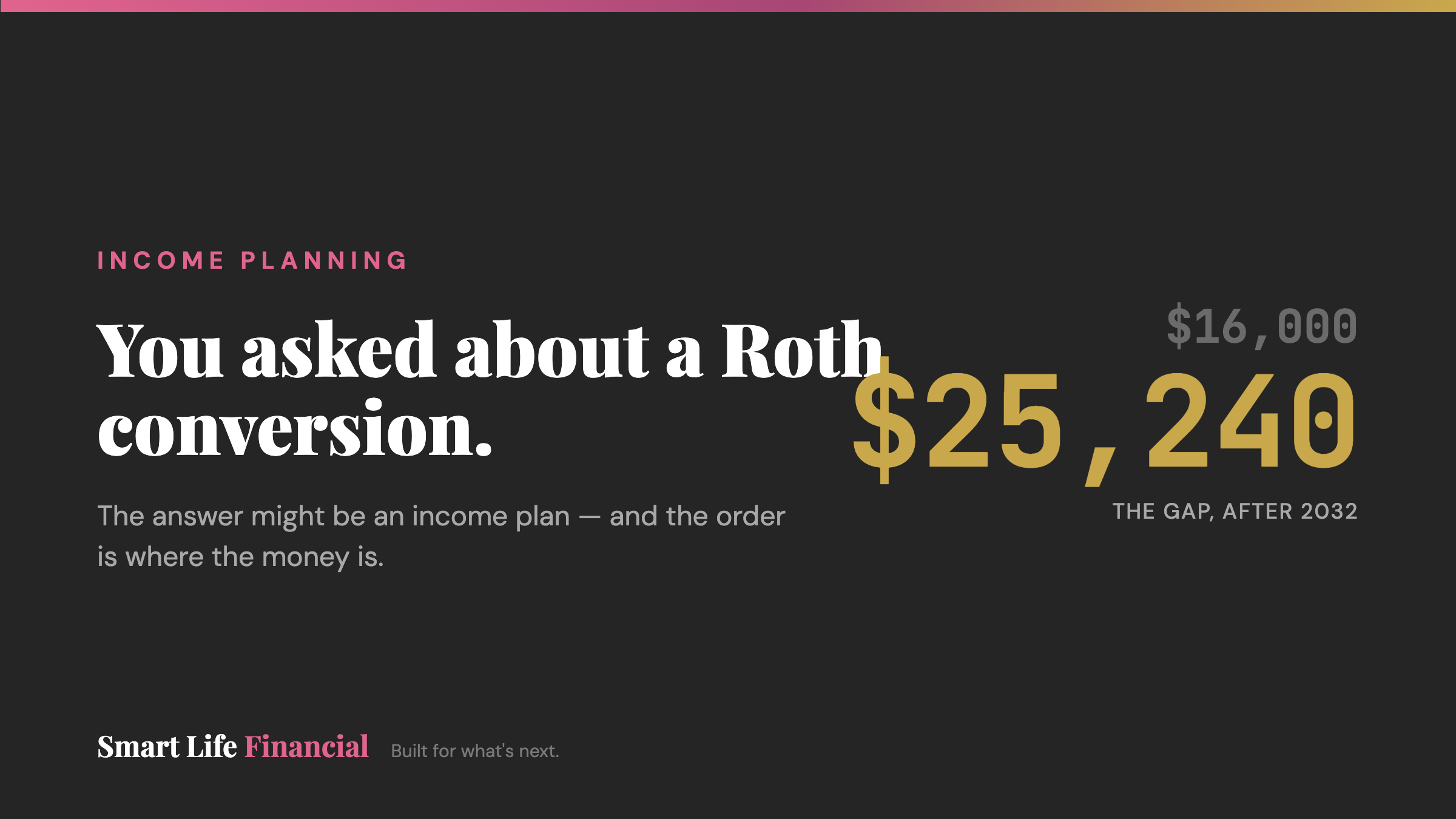
You Asked About a Roth Conversion. The Answer Might Be an Income Plan.
The call usually starts the same way — someone read about Roth conversions and calls saying they need one. Sometimes they're right. A fair number of times, the answer is an income plan, and the order is where the money is.
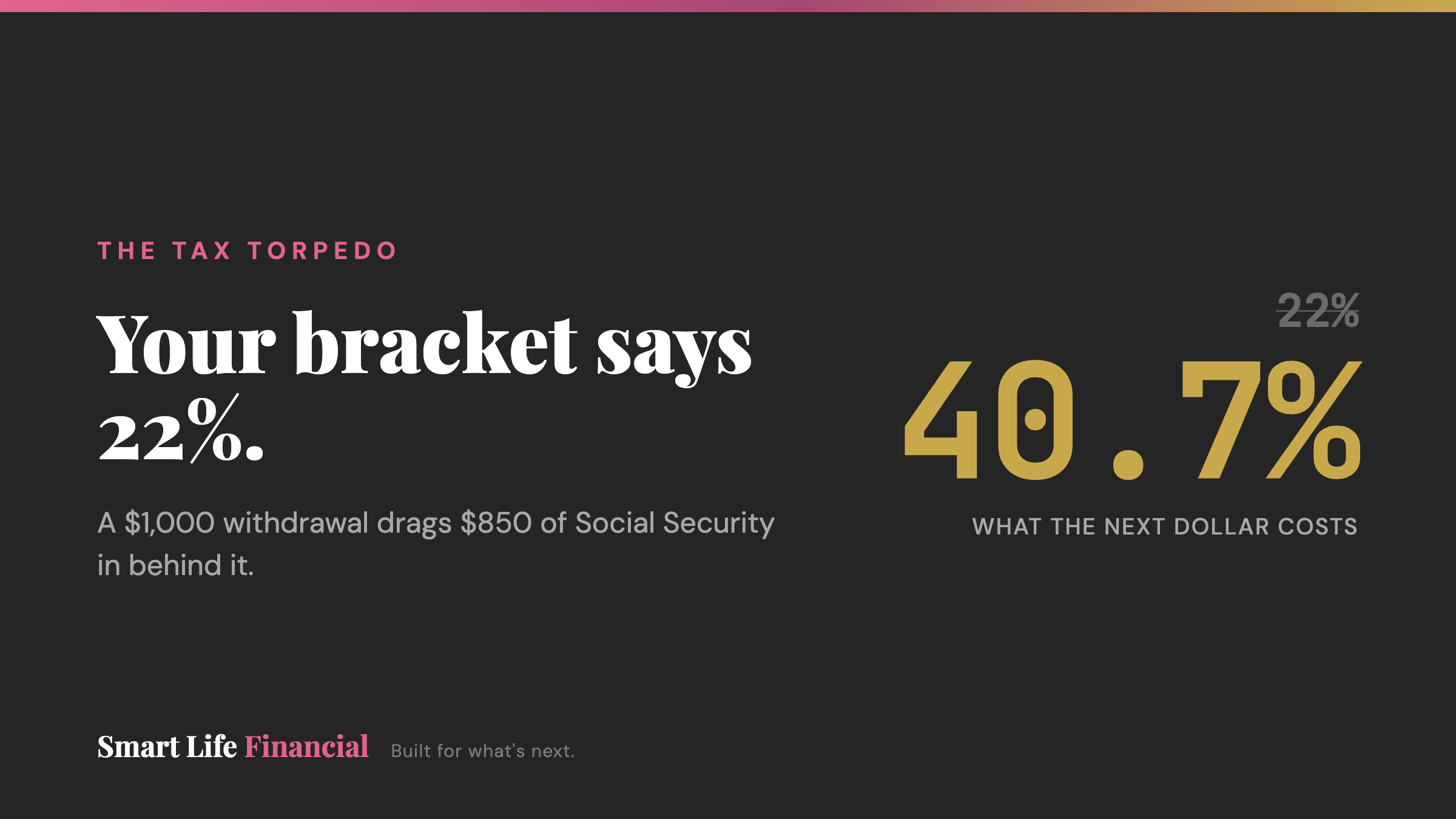
The Other Social Security Cut: The Tax Torpedo Explained
Social Security's taxation thresholds haven't moved since 1984. Here's how a $1,000 IRA withdrawal can cost 40.7% when your bracket says 22% — and what to do.
How a Discount Conversion Actually Works
A discount conversion is a legitimate application of ordinary valuation principles to an unusual asset — and five pressure tests that separate the real thing from the way it is often marketed.