IRMAA: Why a Good Financial Year Can Cost You More in Medicare Two Years Later
IRMAA: Why a Good Financial Year Can Cost You More in Medicare Two Years Later
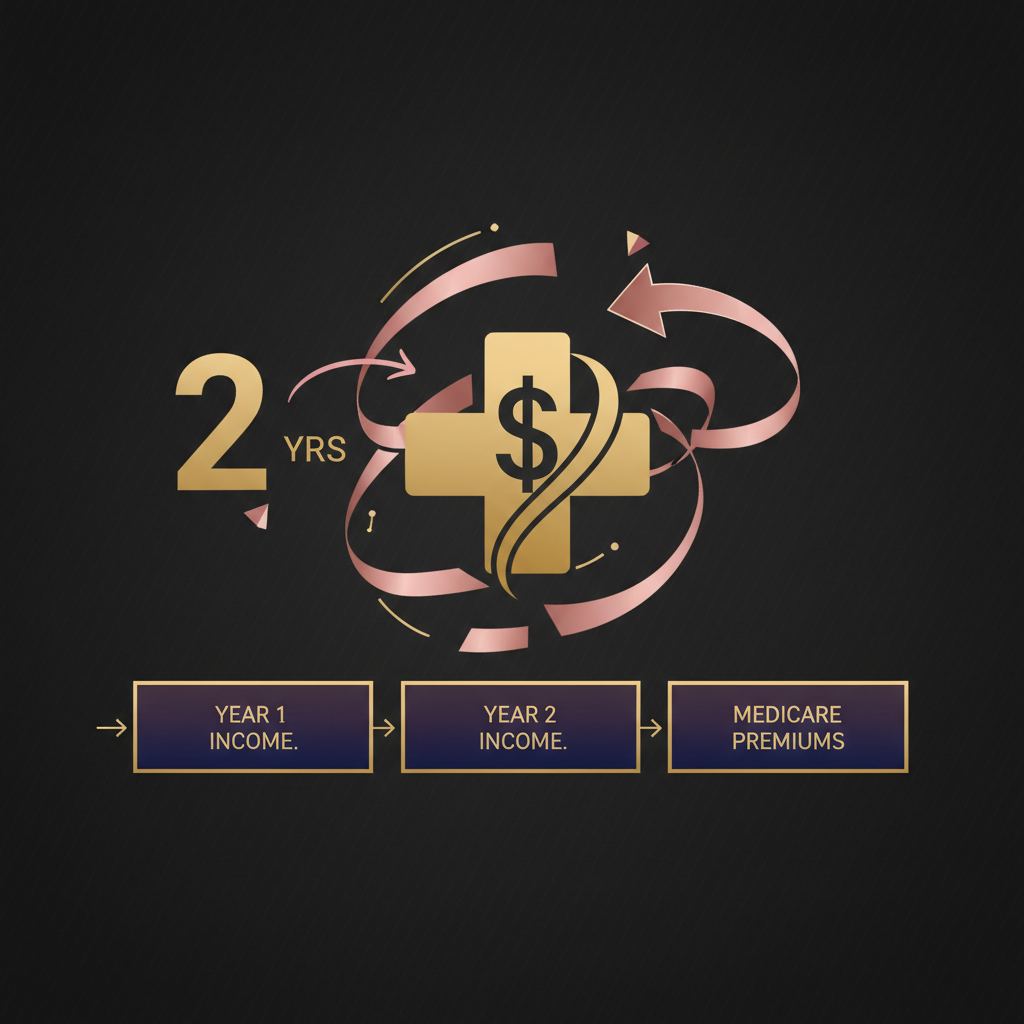
Here's a surprise that catches retirees off guard: the income you earn this year determines what you pay for Medicare two years from now.
This two-year lag is the mechanics behind IRMAA — the Income-Related Monthly Adjustment Amount. It's the government's way of charging higher-income retirees more for Medicare Part B and Part D. And it can be triggered by events you thought were entirely separate from healthcare.
The 2026 IRMAA Thresholds (Based on 2024 Income)
For 2026, Medicare uses your 2024 Modified Adjusted Gross Income (MAGI) to determine your premium tier.
| Filing Status | MAGI Threshold |
|---|---|
| Single filer | $109,000 |
| Married filing jointly | $218,000 |
Exceeding these limits by even $1 results in approximately $1,148 in additional annual cost per person for Part B and Part D combined. That number grows at higher income tiers.
What Counts as Income for IRMAA
This is where most people get surprised. IRMAA uses MAGI, which includes:
- Traditional IRA and 401(k) distributions — every dollar you pull out is taxable income
- Roth conversions — converting traditional money to Roth creates taxable income in the year of the conversion
- Capital gains — both short and long-term gains count
- Social Security lump-sum payments — back payments covering multiple years get counted entirely in the year received
What does NOT count:
- Qualified Roth IRA withdrawals (tax-free by nature)
- HSA withdrawals used for medical expenses
The Roth Conversion Trap
Many retirees do a Roth conversion specifically to reduce future taxable income — which is smart. But there's a timing trap: the conversion itself creates taxable income in the year you do it, which could push your MAGI over the IRMAA threshold and raise your Medicare premiums two years later.
This doesn't mean you shouldn't convert. It means the size and timing of conversions need to be engineered carefully — staying just under the IRMAA cliff each year rather than converting as much as possible.
The Social Security Lump Sum Quirk
If you file for Social Security late and receive back payments covering multiple prior years, the IRS allows you to elect the "lump-sum" method. The key consideration: only the current-year income affects MAGI for IRMAA purposes — but it depends on how low your income was in those earlier years. This is a situation where professional calculation is worth it.
Can You Appeal an IRMAA Surcharge?
Yes — but only in limited circumstances. The surcharge applies for one year, and you can appeal if you experienced a "life-changing event" such as:
- Job loss or reduction in work
- Divorce
- Death of a spouse
You file the appeal using Form SSA-44. A Roth conversion or capital gain generally does not qualify as a life-changing event. The government doesn't see those as unfortunate — they see them as wealth-building.
Want to Know More? Here's the Truth.
IRMAA is one of the most underestimated costs in retirement planning. A couple doing aggressive Roth conversions without tracking IRMAA thresholds can easily pay an extra $2,000–$5,000 per year in Medicare premiums they didn't plan for.
Scott Borhauer builds multi-year Roth conversion plans that account for IRMAA brackets, Social Security taxation thresholds, and tax bracket optimization — all at once, in the same model. If you haven't had someone map this out for you, you're likely leaving money on the table.
Not individualized tax or financial advice. Consult a qualified tax professional for your specific situation.
About the Author
Scott Borhauer
Scott Borhauer is the founder and principal advisor of Smart Life Financial, where he designs retirement income, tax, and estate strategies for federal employees, business owners, and pre-retirees. His work centers on the arithmetic most people never get shown — Roth conversion sequencing, Social Security timing, and the tax cost of doing nothing — and he coordinates with CPAs and estate attorneys to execute the plan, not just write it. Licensed insurance producer, NPN 20016169.
Retirement Income Planning Worksheet
Step-by-step worksheet to map out your income streams and find gaps in your plan.
📊 Free instant download · Unsubscribe anytime
Related Posts
You Asked About a Roth Conversion. The Answer Might Be an Income Plan.
The call usually starts the same way — someone read about Roth conversions and calls saying they need one. Sometimes they're right. A fair number of times, the answer is an income plan, and the order is where the money is.

The Other Social Security Cut: The Tax Torpedo Explained
Social Security's taxation thresholds haven't moved since 1984. Here's how a $1,000 IRA withdrawal can cost 40.7% when your bracket says 22% — and what to do.
How a Discount Conversion Actually Works
A discount conversion is a legitimate application of ordinary valuation principles to an unusual asset — and five pressure tests that separate the real thing from the way it is often marketed.